Where to See Wild Elephants in Sri Lanka: Ethical Safari Guide
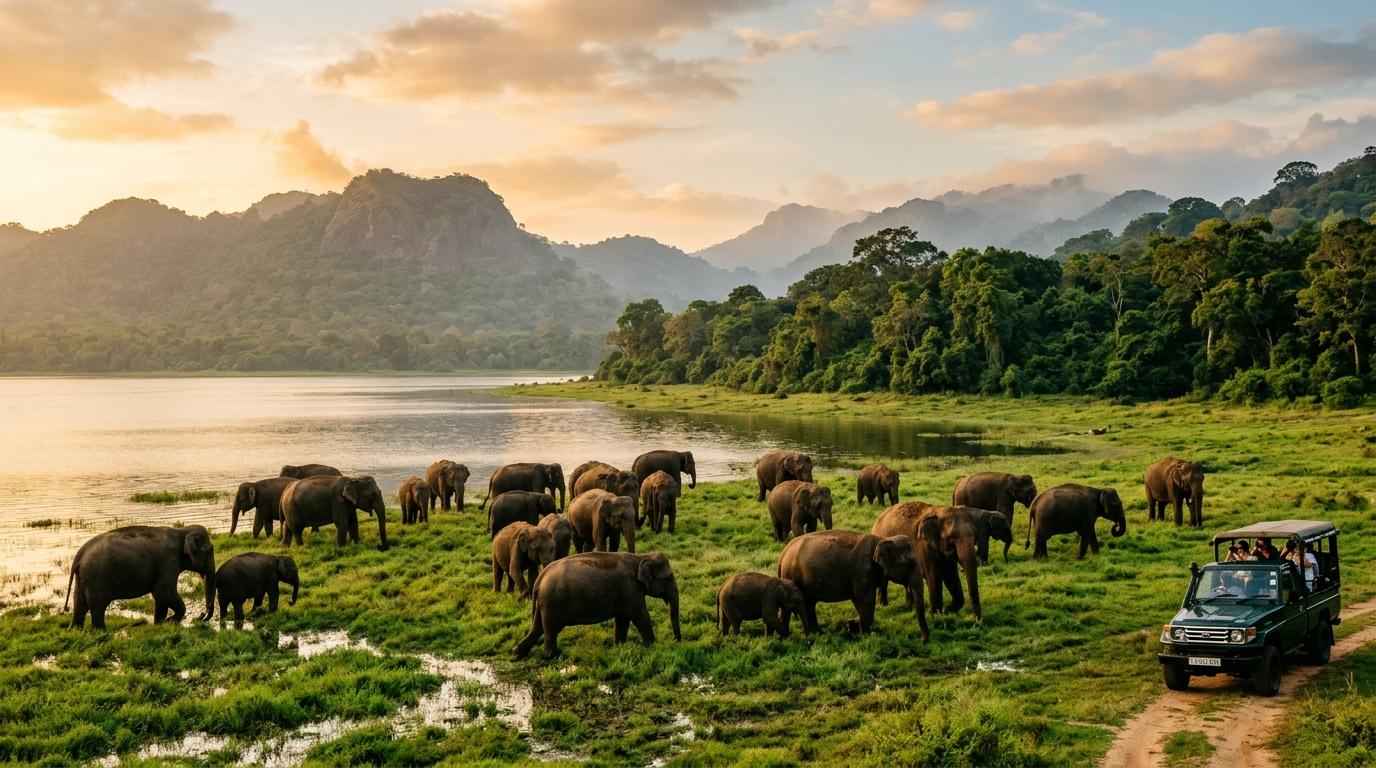
Table of Contents
Asian Elephants in Sri Lanka
Sri Lanka is home to an estimated 6,000 wild Asian elephants (Elephas maximus maximus), an endangered subspecies renowned for its distinct morphological traits and active social structures.
Unlike captive elephant attractions which should be strictly avoided by ethical travelers, Sri Lanka’s national parks offer the privilege of watching wild, unchained herds interact naturally in their homeland.
The Habarana Triangle (Minneriya, Kaudulla, Hurulu)
For travelers visiting the central region, the interconnected parks around Habarana are undeniably the premier elephant watching territory in Asia.
Because the three parks surround vital ancient water reservoirs, herds migrate between them year-round in search of fresh green grass and water.
Golden Rules for Ethical Wildlife Observation
1. Never support venues that offer elephant riding or close-contact baths. These activities depend on cruel captivity practices.
2. Choose safari drivers who respect animal space, stay on marked park trails, and never rev engines to startle herds.
3. Keep voice levels low and turn off phone notifications and camera flash.
Have questions about this safari or tour?
Connect directly with Kalpa on WhatsApp for real-time park status, road conditions, and custom tour planning.
Ask Kalpa on WhatsAppRelated Travel Guides
Minneriya vs Kaudulla Safari – Which Is Better?
Both national parks lie in the same North Central elephant corridor, but seasonal rainfall and herd movements make one better than the other depending on your month of travel.
Complete Habarana Safari Guide: Tips for International Travelers
Everything you need to know about planning a responsible, ethical 4x4 wildlife safari in Habarana, from clothing advice to photography and timing.
Ready to Discover Sri Lanka?
Let us help you plan a memorable Sri Lankan adventure with honest local advice, private vehicles, and direct WhatsApp communication.